Catégorie : English-anglais

  • Louvre museum incident

    Incident au musée du Louvre

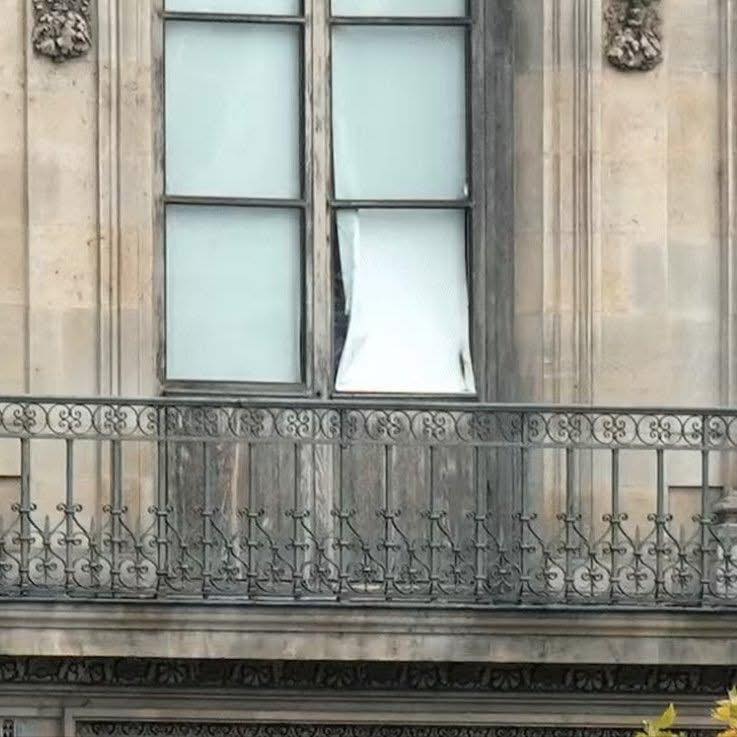
    Vous avez probablement déjà lu ou entendu que le musée du Louvre a été cambriolé dimanche matin en quelques minutes. Sur Internet, quelqu'un a écrit « allez voir au British Museum » – une remarque bien impertinente.

    Sérieusement, l'aile était fermée pour travaux, les auteurs ont utilisé une grande échelle, ont découpé une fenêtre, ont brisé deux vitrines de haute sécurité et ont volé des bijoux précédemment portés par des reines et des impératrices. Deux des objets ont été retrouvés, la couronne désormais endommagée de l'impératrice Eugénie et la deuxième n'a pas encore été identifié, mais est probablement également endommagé.

    La fenêtre n'était pas renforcée. Un rapport d'audit de sécurité avait recommandé de renforcer, mettre à jour, ou modifier divers éléments liés à la sécurité, mais ces mesures n'ont pas été mises en œuvre, alors que le budget consacré aux divertissements avait été augmenté.

    Lorsque nous examinons cette affaire, nous constatons l'implication d'acteurs internes malveillants. Il y a un groupe de personnes qui savaient que des travaux étaient en cours, un groupe de personnes qui savaient quand l'aile était fermée, un groupe de personnes qui connaissaient la rotation des patrouilles de sécurité pour l'aile fermée, un groupe de personnes qui pouvaient organiser une grande échelle, un groupe de personnes qui connaissaient les problèmes de sécurité et la fenêtre, un groupe de personnes qui connaissaient le type de verre de sécurité des vitrines et sa résistance aux chocs, un groupe de personnes qui savaient précisément quoi prendre... Mettez tous ces cercles et bien d'autres encore ensemble et vous obtenez un petit croisement, un diagramme de Venn et des cercles de contacts et de connexions.

    Malheureusement, le report des mises à jour de sécurité est assez courant dans le secteur public et privé. Ajoutez à cela le fait que la majorité des fonds sont consacrés à la sécurité informatique ou cybernétique (SECTI, COMSEC), cela laisse toute une série de domaines de sécurité non techniques oubliés ou ignorés (SECMAT, SECOP et SECPER). L'EMSEC est presque complètement éclipsé par le cyber.

    L'histoire nous rappelle que dans les années 1940, les conseillers des États-Unis suggéraient que les guerres futures se dérouleraient principalement dans les airs (nucléaires et air-air) et que les troupes terrestres auraient beaucoup moins d'importance. Après une décennie axée sur la supériorité aérienne, la stratégie et la politique américaines ont évolué vers une « réponse flexible », ce qui a conduit à accorder moins d'attention à l'armée de terre et davantage à l'armée de l'air. Quelques années plus tard, la guerre du Vietnam éclate et les États-Unis sont mal préparés pour une invasion terrestre.

    Le droit international des conflits armés exige, entre autres, la proportionnalité, ce qui signifie qu'on ne peut pas simplement intervenir avec des armes nucléaires.

    Qu'est-ce que tout cela signifie ? Ne vous concentrez pas uniquement sur un seul domaine de sécurité. Vous devez vous concentrer sur tous les domaines. C'est le principe fondamental du Centre.

    Le général Hyten, aujourd'hui à la retraite, l'a très bien exprimé : « Il n'y a pas de guerre dans le cyberespace, il n'y a que la guerre. »

    En 2017, il a ajouté : « nous devons trouver comment vaincre nos adversaires, et non pas vaincre les domaines dans lesquels ils opèrent. »

    Concentrez-vous sur les menaces et les risques et défendez tous les domaines de la sécurité, pas seulement celui qui a été violé en dernier. Bien sûr, le cyberespace est sexy, il reçoit tous les financements, et il existe des articles vraiment effrayants sur ce que les adversaires peuvent faire. Mais les méthodes traditionnelles de criminalité, d'espionnage et de sabotage règnent toujours, et le cyberespace n'est qu'un moyen différent de les mettre en œuvre.

  • Truth & reconciliation

    Truth & reconciliation

    In a few days, on September 30, Canadians take the day to recognize the harm to indigenous people and their societies, we call it the “national day for truth and reconciliation.”

    While it is often attributed to commemorate the victims and survivors of residential schools (children, families, generations), many of us also attribute the day to the wider set of atrocities committed by Canada upon the indigenous people.

    Meanwhile, our “esteemed” neighbour and once closest ally, has claimed that the Wounded Knee massacre of about 350 Lakota Sioux people (children included) in 1890 was a Wounded Knee battle, and those who fought in the “battle” will keep their medals, as publicly shared by their secretary of war Pete Hegseth on September 25, 2025.

    Frankly, none of this should be as a surprise.

    La US granted 20 Medals of Honor for this massacre yet granted 10 Medals of Honor for the Normandy incursion on D-Day – Medals of Honor for acts of bravery and there is no bravery in the slaughter of innocents including children.

    If the members of the USS Vincennes received commendations (combat action ribbon) for shooting down a civilian aircraft killing 290 people, Iran Air flight IA655 on July 3, 1988, then this is simply more of the same.

    Equally, it shouldn’t surprise anyone if the US awards medals to Vietnam war veterans for the Mỹ Lai massacre (mee-lie) when on March 16, 1968, the US committed a war crime by rounding up civilians (between 350 and 504) and killing them. This included various battalions, regiments, and brigades of the US. Some of the girls and women were raped by several prior to their further brutal slaughter.

    One has to wonder and seriously ask the question: if the US has been our greatest ally and we jointly participate/d and partner/ed in defence and intelligence (FVEY, globally known as the white Commonwealth and the United States), has Canada also been complicit in any inhumane acts?

    Indeed Canada was complicit in the Vietnam War, selling arms and Agent Orange (chemical warfare), content supporting the US and making money from US actions in the Vietnam War.1

    If indiscriminate death of civilians including children and infants was and is bad (Russia, China, Myanmar/Burma, Israel… terrorists like ISIS and al-Qaeda – now state leaders of Syria and Afghanistan) then isn’t it bad all the time and everywhere?

    Countries sitting silent while the US rewrites history and rewards criminal acts are complicit in their own ways and asking for support in other criminal acts around the world is hypocrisy.

    In a time (period of 9 months plus the first Trump administration) when state leaders, NATO SecGen, and billionaires bow down to US leadership, showering praise and gratitude upon President Trump, we know the leaders care more for money, not for the betterment of humanity or the value of human life and human dignity.

    All this was highlighted by PM Keir Starmer’s guest list of the September 18, 2025 Windsor Castle state dinner, bowing to Trump, which included US and UK business leaders: Apple CEO Tim Cook, Nvidia’s CEO Jensen Huang, OpenAi’s CEO Sam Altman, Blackstone’s CEO Stephen Schwarzman, Fox News owner Rupert Murdoch, Palantir Technology CEO Alex Karp, ARM’s CEO Rene Haas, Alphabet’s president Ruth Porat, and the many billionaires in Trump’s administration.

    The very definition of an oligarch is a very rich person who can influence government to their financial benefit.

    All billionaires in the US can do this, arguably a billionaire is the President of the US. So is the US is an oligarchy with oligarchs?

    Canada isn’t far off, it’s just more subtle as our billionaires are a bit less obvious about it. As a Canadians, let’s accept out our faults to fix them.

    Yesterday, on September 25, 2025, US Energy Secretary Chris Wright, stated “India buys Russian oil because they can buy it for cheaper… We wish India would work with us to buy [US oil]. You can buy oil from every nation on the earth, just not Russian oil. That’s our position. America has oil to sell, so does everybody else. We don’t want to punish India.”

    Does this mean it’s now OK to buy oil from Iran, Venezuela, or Serbia? 

    It’s not that the US wants to solely sanction Russia in order to compel Russia to change behavior, it’s that one must buy US oil and energy products. Chris Wright founded Liberty Energy (2011 when it was known as Liberty Oilfield Services), today worth $2.8 B USD. He founded and supported other companies in the US energy vertical market, and in 2023 as CEO of Liberty earned $5.6 M USD.

    If the US global tariffs wasn’t enough to showcase the obvious bullying and arm twisting by the US, then this latest round of bullying for money isn’t going to change anyone’s mind.

    Ukraine buys oil from India (Jul 2025 India supplied 15.5% of Ukraine’s diesel imports – daily 2700 tonnes). India remains the top supplier of diesel to Ukraine for Aug 2025 to 18.1%. Couple this with the sabotage of the Nordstream pipeline.

    And now, billionaire Larry Ellison is back in the media spotlight. If you followed his activities in the 90s you will know of his yatch racing, MiG-29 purchase, and more. Today, the billionaire (oligarch), Oracle founder (financial supporter of the IDF – serious question: who personally funds a military?) has reasonable control of CBS, Paramount, Warner, CNN and soon TikTok.

    Is this the world we want?

    1. Victor Levant, Quiet Complicity Canadian Involvement in the Vietnam War (Between the Lines, 1986). ISBN 978-0919946736. ↩︎
  • “It may be dangerous to be America’s enemy, but to be America’s friend is fatal”

    “It may be dangerous to be America’s enemy, but to be America’s friend is fatal”

    The follwing quote came up in discussions on Wednesday, and we notice online that it’s being ab/used to support various positions. Because of this, we thought we would shed some light on the quote and let the readers formulate their own opinions.

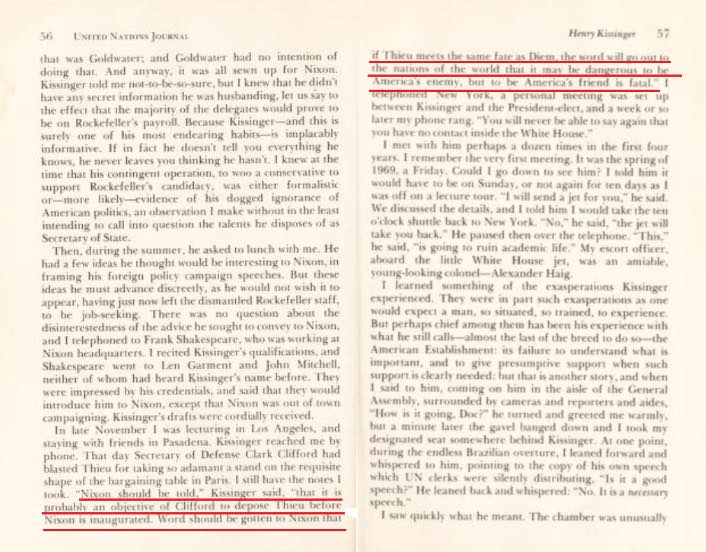
    “The word will go out to the nations of the world that it may be dangerous to be America’s enemy, but to be America’s friend is fatal.”¹ – Henry Kissinger, US Secretary of State (‘73 to ‘77) and National Security advisor (‘69 to ‘75) under Nixon and Ford administrations.

    While Kissinger must have believed being an ally of the US is better, he was likely talking about the perception in his quote taken over the phone in November 1968 by William Buckley, shortly after Nixon was elected.

    The quote was in commentary regading Vietnam’s Nguyễn Văn Thiệu’s fate compared to Ngô Đình Diệm fate.

    The full quote: “Word should be gotten to Nixon that if Thieu meets the same fate as Diem, the word will go out to the nations of the world that it may be dangerous to be America’s enemy, but to be America’s friend is fatal.”¹

    It’s interesting how this quote still applies today, and applies years before Kissinger said it.

    Interesting even more is that Kissinger paraphrased Russian Major General Aleksey Efimovich Vandam’s quote, which was published in 1912, so likely stated much earlier than that, before the Soviet era.

    Наконец наступает очередь и Китая, который после своих разнообразных опытов с англичанами и американцами смело мог бы сказать теперь — « плохо иметь англосакса врагом, но не дай Бог иметь его другом! »²

    Translated: Finally, it is the turn of China, which, after its various experiences with the British and Americans , could safely say now — “it is bad to have an Anglo-Saxon as an enemy, but God forbid to have him as a friend!”

    1 Buckley, William F., Jr. United Nations Journal: A Delegate’s Odyssey. New York: G.P. Putnam’s Sons, 1974. pp 56-57.

    2 Вандам, Алексей Ефимович. Наше положение. Типография А.С. Суворина, 1912. p123. URL “https://archive.org/details/nashe_polozhenie

  • Crime and violent crime in Canada

    Crime and violent crime in Canada

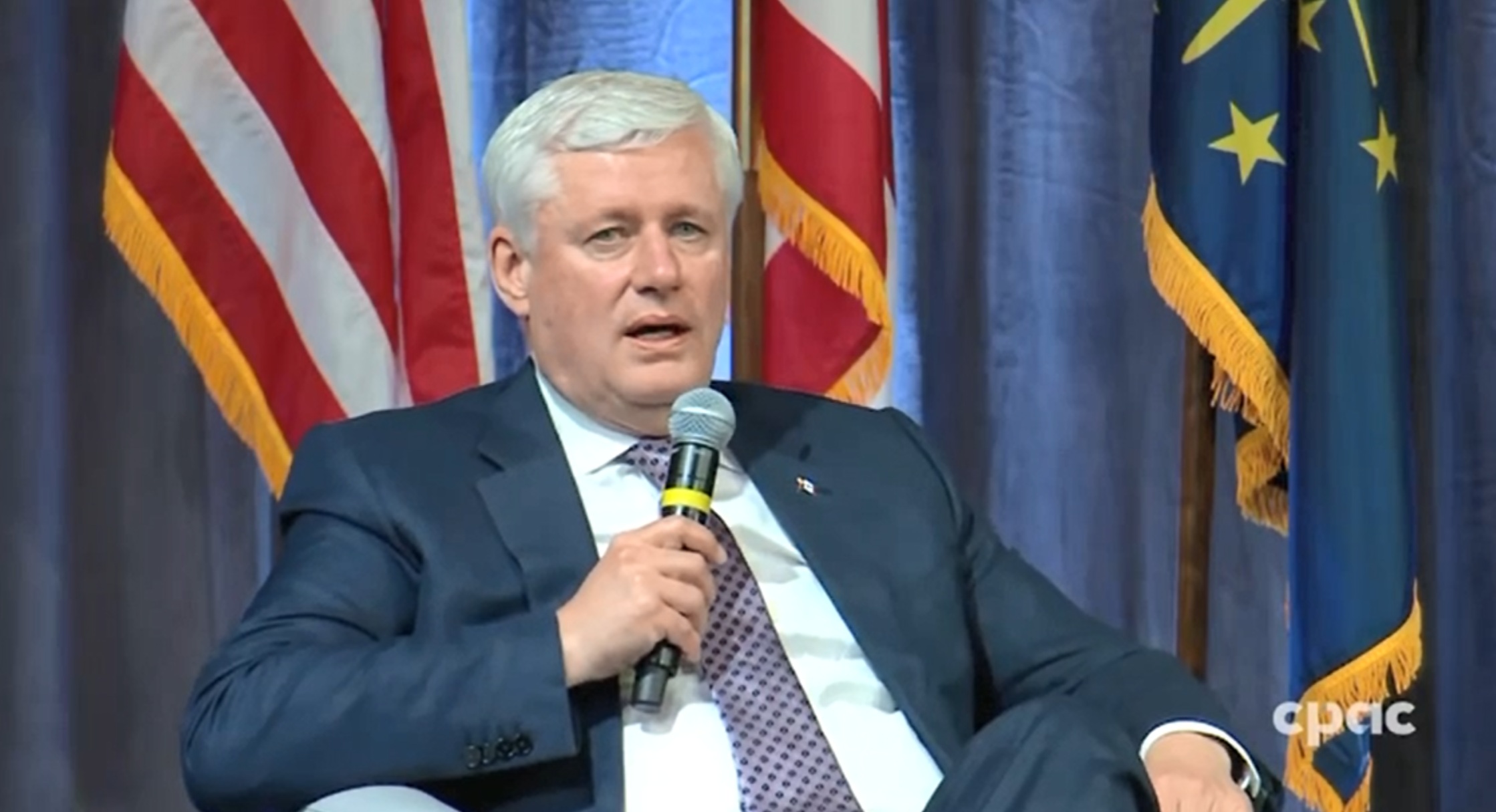
    The NSCOESN team members enjoyed watching the near hour long Stephen Harper interview on July 28, 2025 for the Council of State Governments’ Midwestern Legislative Conference held at Saskatoon’s TCU Place, Saskatchewan.1

    We captured several quotes, and encourage you to watch the entire interview by Victor Thomas, president and CEO of the Canada-India Business Council.

    We have included one clip of just over 3 minutes long where Harper discusses his advice to Prime Minister Carney on CANUS trade and finding alternative trading partners, including Europe and India.

    Stephen Harper discusses Canada-U.S. relations at Saskatoon conference – July 28, 2025

    As a sidenote, the event was held in Saskatoon. Saskatoon has 30 active crime groups, spread across approximately 317,000 people including the surrounding area.

    Think about that for a moment. The Saskatoon Police Service has approximately 500 constables and special constables.2 If each of those 30 active crime groups have a conservative estimate of 50 members per, thats 1,500 criminals involved in organized crime. That number is worse if there are more members per crime group. Consider the risk (likelihood vs. consequences) if each of those criminal group members chose to pickup a firearm with the intent to target the local police. It is a good thing criminal groups don’t tend to all work together!

    StatCan measures Canada’s crime severity index (CSI) which considers the volume and severity of police reported crimes. Their data just released July 22, 2025.3 You will need to download the entire data set to see the breakdowns of the metropolitan areas and cities.

    Canada Crime Report summarized the data very well from 2010 to presently available data of 2024.4

    IDCityCSIViolent CSI
    1️⃣Winnipeg MB130.9199.1
    2️⃣Edmonton AB109.3122.0
    3️⃣Saskatoon SK106.7142.5
    4️⃣Vancouver BC92.996.4
    5️⃣Surrey BC86.579.4
    6️⃣Montréal QC75.7112.5

    StatCan now reports Saskatoon data, updated July 30, 2025, with a CSI of 117.49 and violent CSI at 159.83.5

    1. https://www.youtube.com/live/D4r9S0lcw3o?si=PAzPXR9er9nj5YsQ ↩︎
    2. https://leadersinternational.com/wp-content/uploads/2024/02/OppProfile_Saskatoon-Police-Service_Police-Chief_FINAL.pdf ↩︎
    3. https://www150.statcan.gc.ca/n1/en/subjects/crime_and_justice/crimes_and_offences/crime_severity_index ↩︎
    4. https://canadacrimereport.com/crime-severity-index?min_population=250000&sort=crime_severity_index&direction=desc ↩︎
    5. https://www150.statcan.gc.ca/t1/tbl1/en/tv.action?pid=3510006101 ↩︎
  • Canada-Emirates drug trafficking

    Canada-Emirates drug trafficking

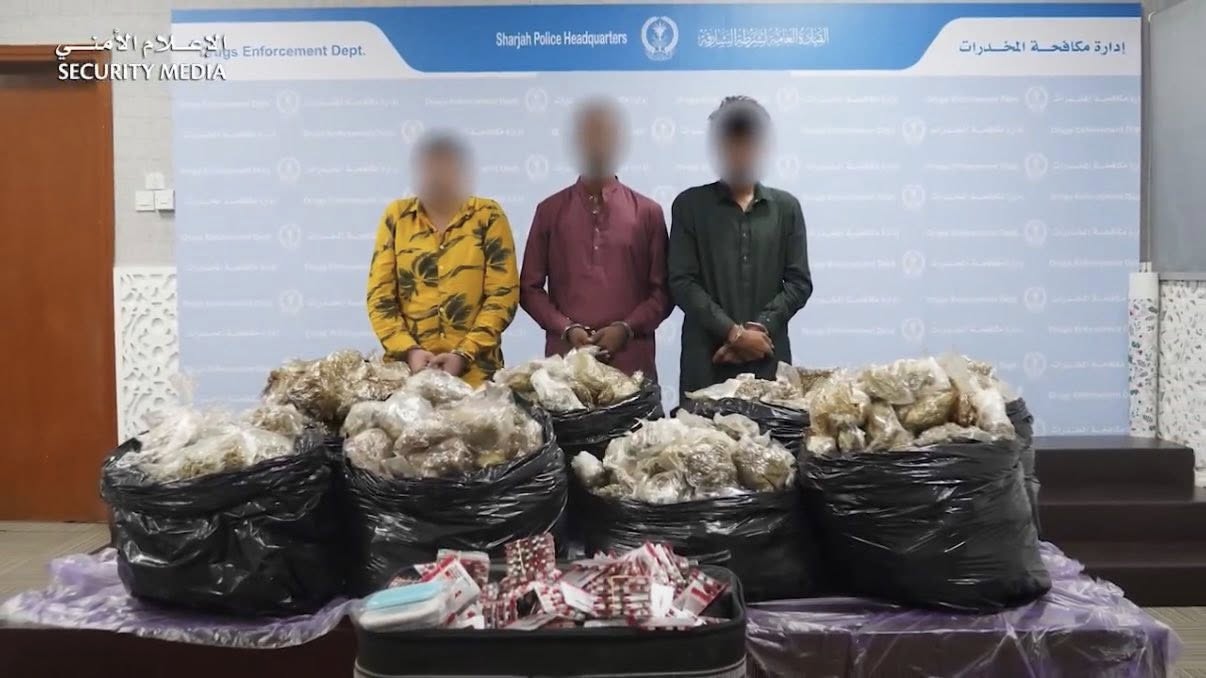
    Reported by the Emirates Ministry of Interior (MoI), on July 18, 2025 the Sharjah police (UAE) seized 131 kg of narcotics and psychotropics as they tracked the smuggling from Toronto Canada port, through the St. Lawrence Seaway, into Málaga Spain port, and on its way to the UAE (Sharjah is adjacent to Dubai).1

    Seven people have been arrested, including a husband and wife. The drugs were shipped hidden with used car parts in a shipping container.

    The NSCOESN has studied drug trafficking into and across Canada, along with drug consumption by the general public (various demographics, rich and poor), and none of this is a surprise.2

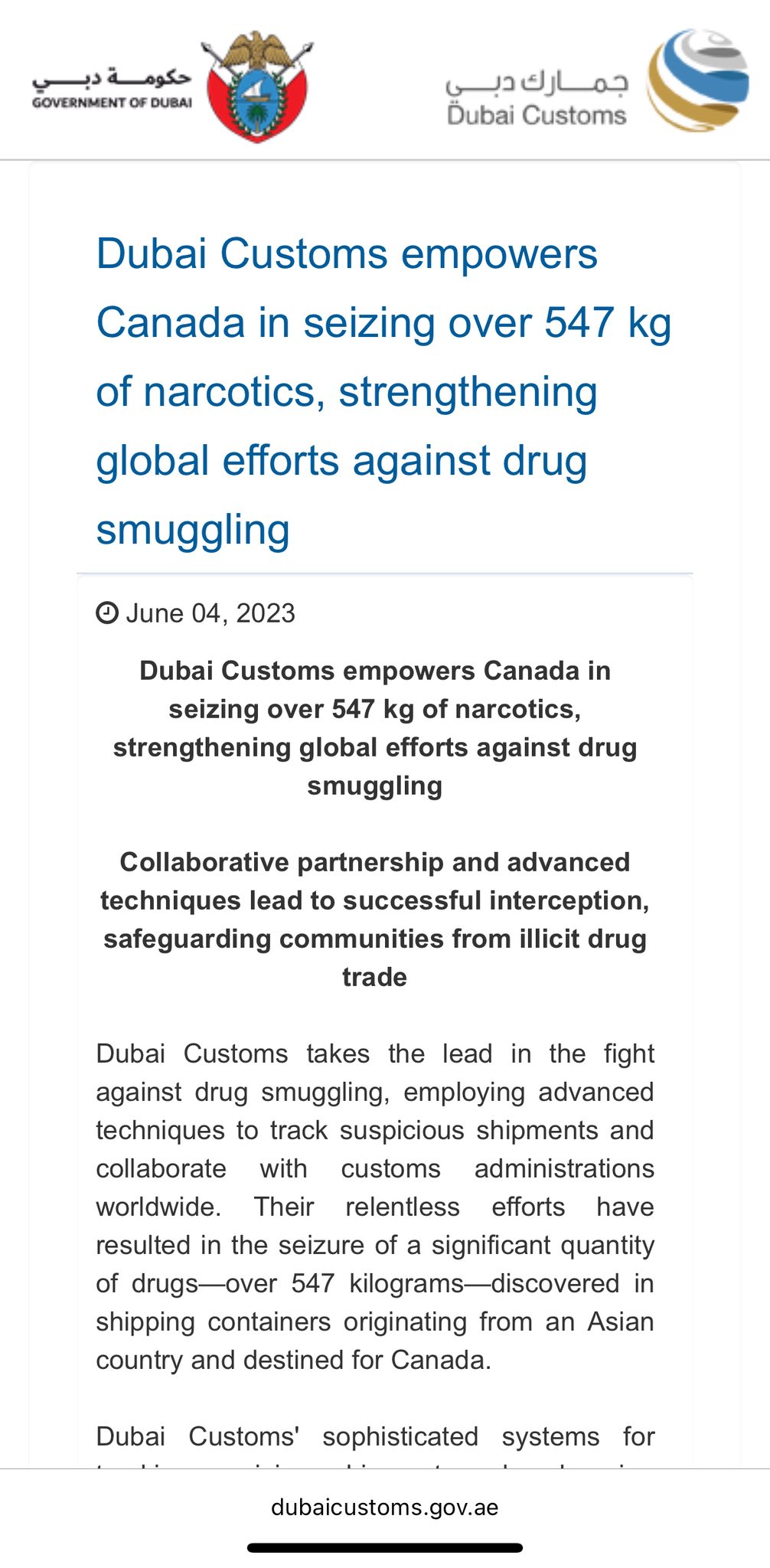
    In 2023 June, Dubai Customs seized nearly 550 kg of drugs destined for Canada.3 Unfortunately that is not included in today’s reporting. Indeed back then, Canada did not have Kevin Brosseau appointed as Fentanyl Czar, specifically funded and supported to counter cross-border drug trafficking.4

    Mr. Brosseau was appointed to primarily counter drugs entering the US from Canada, however, they would likely notice drugs leaving Canada in general – especially if the Emiratis are able to track it from Toronto to Málaga to Dubai. With skilled teams, one can watch drug trade happening in various cities across Canada. It’s likely that you know someone who consumes illicit drugs or distributes it. Indeed, you might not be aware of their activities.

    Besides the domestic and international criminality of smuggling of drugs by organized crime groups from Canada into other jurisdictions, it can also harm our international relations and potentially international trade. Shifts in bilateral trade can impact domestic companies, trade revenues, and jobs, thereby the Canadian economy.

    Additionally, when drugs enter Canada, they are distributed to a range of age groups (from children to adults) raising various social and public safety concerns, along with budget challenges to counter the drug trafficking/use and the added burden upon Canada to provide healthcare support through our provinces and territories.

    All of these and more are national security concerns.

    1. See X/Twitter post by the UAE MoI dated July 18, 2025, https://x.com/moiuae/status/1946288014390673642 ↩︎
    2. The NSCOESN has performed a study on various drugs seized by the US entering Canada, and published a report on cocaine seizures by US authorities attempting to enter Sarnia over the Blue Water Bridge between January and December 2024. ↩︎
    3. See article dated June 4, 2023 by Dubai Customs titled “Dubai Customs help Canadian authorities seize shipment of 547kg of drugs,” https://www.dubaicustoms.gov.ae/en/mobile/pages/newsdetails.aspx?itemid=1922 ↩︎
    4. https://www.canada.ca/en/privy-council/services/canada-fentanyl-czar.html ↩︎
  • Canada’s financial stability

    Canada’s financial stability

    Financial stability is a pillar of national security.

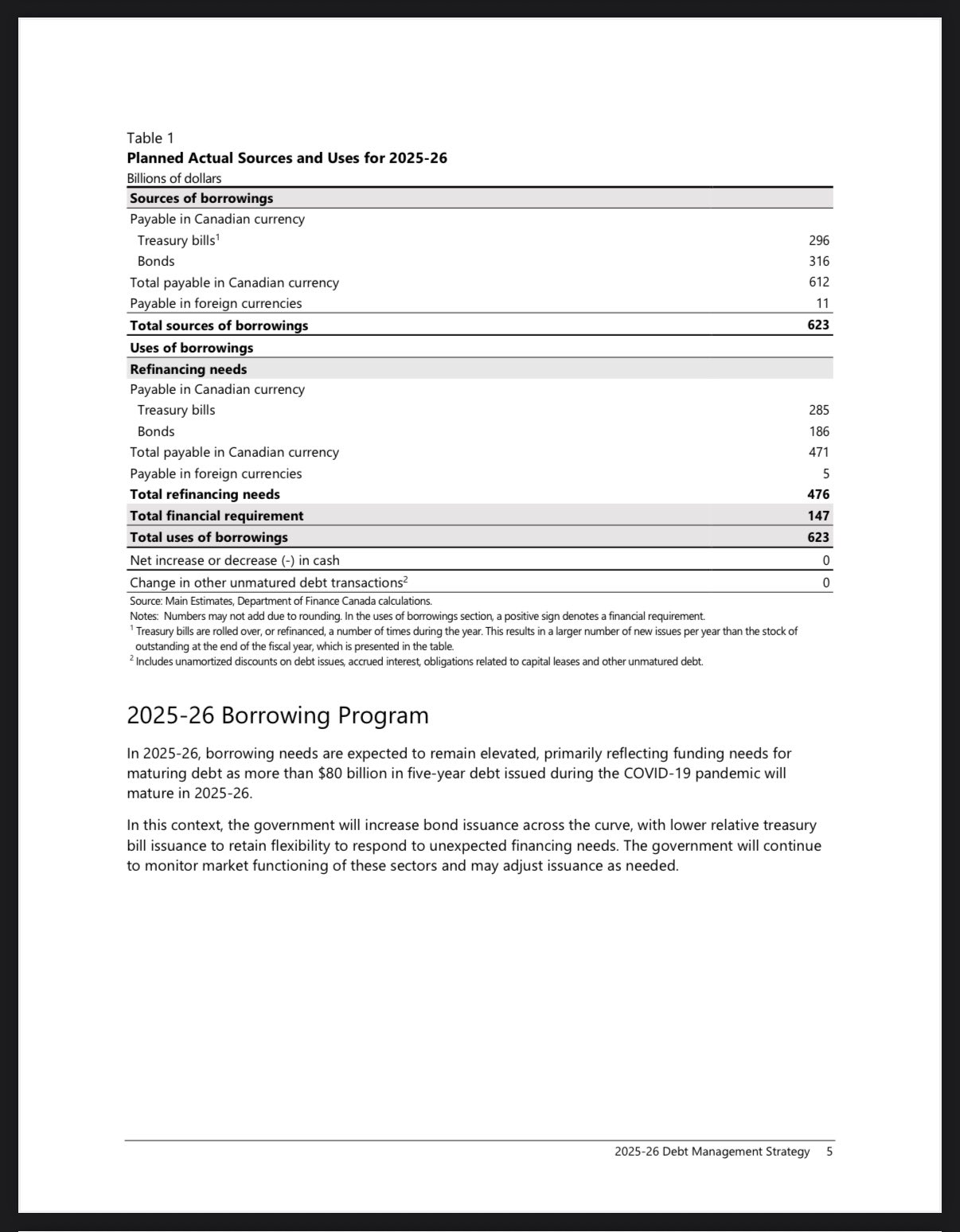
    Canada’s debt management strategy tabled by the Department of Finance is requesting to borrow $147 B for 2025/26 (see table 1) and includes $30 B to fund purcases of Canada mortgage bonds.1

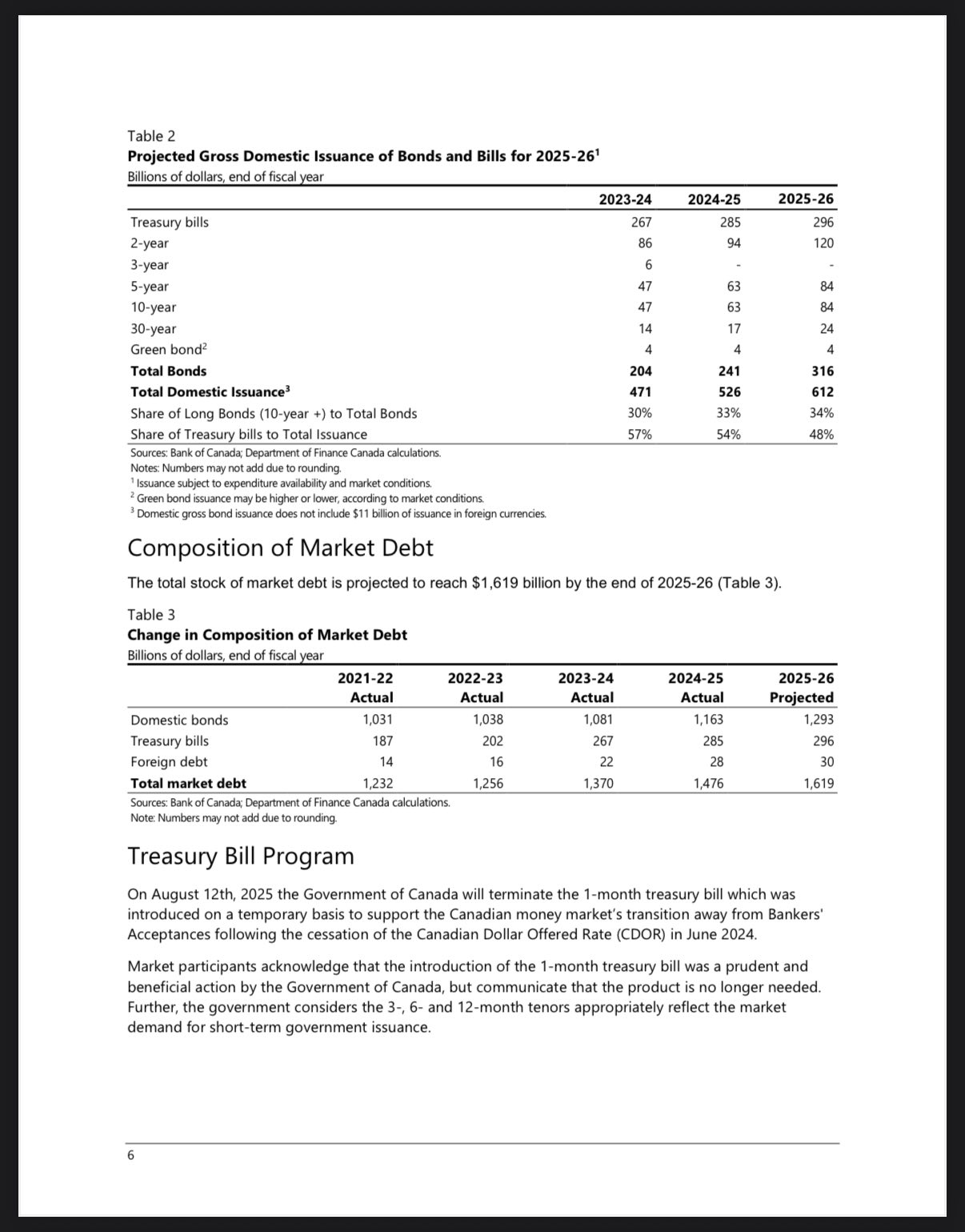
    This results in a $1.6 T market debt alone (see table 3).

    We remain curious to see what this does to the Canadian dollar and economy.

    With the GC already planning permanent position cuts over the next 3 fiscal years estimated at a total of almost $20 B,2

    • 26/27 (7.5%);
    • 27/28 (+2.5%, totaling 10%); and
    • 28/29 (+5%, totaling 15%),

    plus executing job cuts this fiscal 25/26 at various departments and agencies:3

    • ESDC (800 jobs at Service Canada, Passport);
    • CRA (3000 jobs over the past few months including 280 permanent positions; last fiscal year 6656 jobs were cut);
    • IRCC (unknown positions); and
    • more that are not yet public plus job cuts from last year,

    coupled with:

    • the number of homes for sale;
    • US foreign policy volatility and US trade tariffs;
    • the job market shrinking;4
    • the cuts to consultants;
    • the impact to new university graduates for the next 4 years with unforgivable debt; and
    • inflation which is likely to continue increasing,

    we wonder what this will do to our:

    • housing market (in which rests the majority of Canadians retirement);
    • general retirement investments (RRSPs and other cash);
    • the value of CAD currency;
    • insolvency rates across Canada; and
    • the rest of the Canadian economy.

    Indeed, that was a long sentence!!

    1. Released July 16, 2025 https://www.canada.ca/en/department-finance/services/publications/debt-management-strategy/2025-2026.html ↩︎
    2. FinMin Champagne sent letters to the ministers, informing them of the next three fiscal year job cuts, https://cupe.ca/carneys-cuts-threaten-services-and-jobs-help-our-communities-thrive ↩︎
    3. https://psacunion.ca/1100-jobs-cut-service-canada-and-cra-threatening ↩︎
    4. https://www150.statcan.gc.ca/n1/daily-quotidien/250404/dq250404a-eng.htm ↩︎